留言

China Top 10 Telescopic Guide Rails Suppliers?

Choosing reliable China suppliers for Telescopic Guide Rails requires more than comparing catalog prices. Buyers must examine engineering capability, production consistency, material quality, and after-sales support. This guide introduces ten suppliers that serve industries such as automation, furniture, medical equipment, and industrial machinery.

The selection focuses on practical evidence, including product range, load ratings, travel length, mounting accuracy, and corrosion resistance. Detailed attention is also given to steel grades, ball-retainer design, surface treatment, and quality-control procedures. A dependable supplier should provide clear drawings, tested specifications, sample support, and traceable inspection records. Factory experience matters.

Real-world performance depends on more than a smooth demonstration sample. Rails may face vibration, dust, frequent cycling, temperature changes, or uneven installation. Buyers should request cycle-test data and confirm whether published load ratings apply horizontally or vertically. Certification claims should be checked against original documents, not copied website statements. This point is sometimes overlooked. It should not be.

The supplier rankings are intended as a practical starting point, not an unquestionable verdict. Company strengths can change with new equipment, export policies, raw-material costs, or management decisions. Some suppliers may excel at standard drawer slides, while others handle customized industrial assemblies more effectively. Technical communication also deserves attention, especially when drawings, tolerances, and delivery schedules cross language barriers. By comparing verified capabilities with the actual application, purchasing teams can reduce avoidable failures and build more reliable sourcing decisions. Mistakes remain possible, so sample testing and independent technical review are strongly recommended before large orders.
China Top 10 Telescopic Guide Rails Suppliers?

What Are Telescopic Guide Rails and How Do They Work?

What Are Telescopic Guide Rails and How Do They Work?

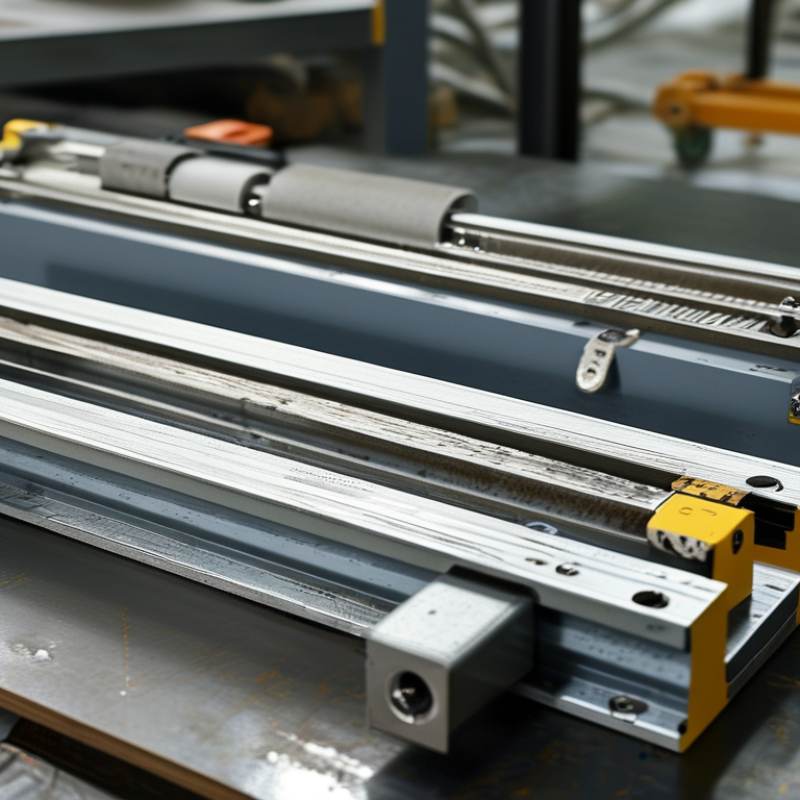
Telescopic guide rails are sliding assemblies that support and extend moving loads. They use nested steel sections, ball bearings, or rollers. When pulled outward, each section travels along a controlled path. This creates smooth access inside cabinets, machines, service drawers, and industrial equipment.

A 2024 report from Grand View Research identifies automation and material handling as major drivers of the linear motion market. The report expects this market to grow at roughly 8% annually through the decade. Telescopic rails benefit from that demand because they save installation space while providing long travel. A three-section rail can often extend beyond its closed length. That detail matters in compact equipment.

Load rating depends on rail length, mounting position, shock, and cycle frequency. ISO 9001-based quality systems can improve process consistency, but certification does not guarantee rail performance. Engineers should verify load tests, deflection data, corrosion resistance, and cycle-life results. A 2023 MarketsandMarkets analysis also links industrial automation growth with stronger demand for precision motion components. Real installations can still behave differently. Misalignment remains a common problem. Even a small mounting error may increase friction, noise, and wear. My practical view is simple: published capacity is only a starting point, not a promise.
China Top 10 Telescopic Guide Rails Suppliers? — What Are Telescopic Guide Rails and How Do They Work?

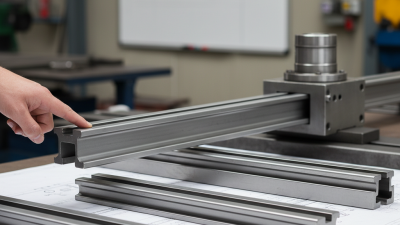
Telescopic guide rails are nested sliding sections designed to provide controlled linear movement while saving installation space. In an ideal equal-section arrangement, each additional rail section adds approximately one closed-length unit of travel, although real products vary because of overlap, mounting geometry, and safety requirements.

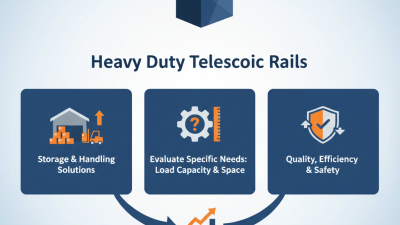
The chart shows the approximate full-extension travel ratio for common telescopic rail configurations. A two-section rail provides about 100% travel relative to its closed length, while three-, four-, and five-section designs provide approximately 200%, 300%, and 400%, respectively. Actual load capacity and travel depend on rail profile, material, ball-retainer design, mounting orientation, and permitted deflection.

Key Factors for Evaluating Chinese Guide Rail Suppliers

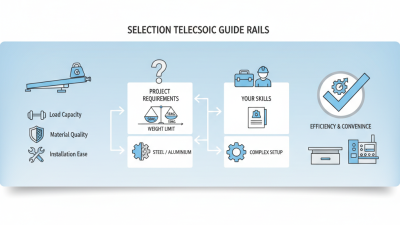
When evaluating Chinese telescopic guide rail suppliers, technical evidence matters more than polished catalogs. Request drawings showing rail thickness, mounting-hole tolerance, travel length, and rated load. A reliable supplier should explain whether the load rating applies horizontally, vertically, or across the full extension. These details affect real performance.

Ask for material certificates and surface-treatment information. Cold-rolled steel, stainless steel, and aluminum behave differently under humidity, vibration, and repeated movement. Review test data for cycle life, noise, deflection, and corrosion resistance. Numbers can mislead. Confirm how the tests were performed, including load position and speed. A sample run is valuable, especially when the rail must support a drawer, battery tray, or industrial enclosure.

Supplier evaluation also includes communication and process control. Check whether engineers respond with clear calculations instead of vague promises. Inspect sample dimensions with calipers, and compare several pieces from the same batch. Ask about incoming material checks, production inspection, packaging, and replacement procedures. I once treated a low price as proof of efficiency, but inconsistent hole spacing caused expensive assembly adjustments. That experience changed my review method. Request a pilot order, document every deviation, and examine delivery reliability over several shipments. A capable supplier may admit limitations and suggest a safer specification. That honesty is often more useful than perfect sales language.

China Top 10 Telescopic Guide Rails Suppliers? - Key Factors for Evaluating Chinese Guide Rail Suppliers

No. Evaluation Dimension What to Verify Practical Reference Point Recommended Evidence Weight
1 Product Range and Application Fit Check whether the supplier covers partial-extension, full-extension, over-extension, heavy-duty, stainless-steel, locking and customized telescopic guide rail designs. The selected rail should match the required travel length, mounting orientation, load direction, operating environment and available installation space. Product catalogue, engineering drawings, load-travel charts and application references with confidential details removed. 15%
2 Rated Load and Safety Margin Confirm how load ratings are defined, including extension position, mounting method, duty cycle, shock loading and acceptable deflection. Do not compare load figures unless the test conditions are identical. Select a documented safety factor appropriate to static, dynamic or impact loading. Test reports, calculation sheets, rated-load definitions and samples tested in the intended mounting position. 15%
3 Material and Heat Treatment Verify the grade, thickness, surface treatment and heat-treatment process of the rail, ball retainer and rolling elements. Material selection should reflect load, corrosion exposure, temperature, wear and required service life; hardness values must be specified by the supplier rather than assumed. Material certificates, hardness records, coating specifications and independent laboratory reports where necessary. 12%
4 Dimensional Accuracy and Tolerances Review rail straightness, parallelism, hole position, mounting-hole size, closed height, travel length and end-stop consistency. Tolerances should be stated on controlled drawings and checked with calibrated measuring equipment. Critical dimensions must be linked to the customer installation interface. Inspection plans, first-article reports, dimensional records and calibration certificates. 12%
5 Corrosion Protection Assess zinc plating, electrophoretic coating, stainless-steel construction, passivation and corrosion-control methods for the intended environment. Salt-spray performance is meaningful only when the coating system, test standard, test duration and failure criterion are clearly identified. Coating data sheets, salt-spray reports, surface-treatment process controls and environmental suitability statements. 10%
6 Quality Management System Determine whether incoming materials, production processes, final inspection, nonconforming products and corrective actions are controlled systematically. A current ISO 9001 certificate from an accredited certification body is useful, but it should be supported by process records and an audit. Certificate validation, quality manual, process-control records, inspection reports and factory-audit findings. 10%
7 Testing and Product Validation Check testing for static load, cycle life, pull-out force, locking performance, noise, friction, corrosion and temperature where applicable. Life-test results should identify the load, extension, speed, cycle count, lubrication condition, failure criteria and sample quantity. Internal test procedures, machine records, signed reports, sample traceability and third-party validation. 10%
8 Customization and Engineering Support Evaluate capability for custom lengths, hole patterns, mounting brackets, locking mechanisms, materials, finishes, packaging and application-specific testing. A capable supplier should provide controlled drawings, design-for-manufacturing feedback, prototype samples and documented engineering changes. Sample development schedule, engineering-change procedure, prototype records and technical communication response time. 8%
9 Production Capacity and Delivery Reliability Review monthly capacity, production lead time, critical-process bottlenecks, raw-material availability and contingency planning. Capacity claims should be supported by equipment lists, workforce information, historical delivery performance and a defined production schedule. Capacity statement, order-history summary, on-time-delivery records, production plan and continuity plan. 5%
10 Compliance, Packaging and Total Cost Assess product compliance, packaging protection, export documentation, warranty terms, payment conditions, tooling charges and long-term replacement availability. Request applicable RoHS or REACH declarations for the destination market and compare total landed cost rather than unit price alone. Compliance declarations, packaging specification, commercial quotation, warranty policy and total-cost comparison. 3%
Total Evaluation Weight 100%

Note: The reference points above are general procurement benchmarks, not performance claims for any specific supplier. Final supplier ranking should be based on verified documents, sample testing, factory audits and application-specific requirements.

China’s Top 10 Telescopic Guide Rail Suppliers

China’s Top 10 Telescopic Guide Rail Suppliers

China’s top ten telescopic guide rail suppliers serve industrial automation, storage systems, furniture, and transport equipment. Their products commonly use cold-rolled steel, stainless steel, or aluminum. Each material fits different working conditions.

A reliable supplier should provide load ratings, travel length, mounting dimensions, and cycle-life data. Ask for testing records, tolerance details, and samples before placing a large order. Experienced engineers can also recommend side-mount, under-mount, or heavy-duty rail designs. However, catalog data may not reflect real installation conditions. That is where careful verification matters.

Tips: Check the rail under actual load, not only its empty movement. Inspect noise, deflection, surface finish, and locking accuracy. Confirm packaging quality for long-distance shipping. Request drawings in a clear format. Also, discuss spare parts and technical support before purchase. A low price can hide weak testing or inconsistent production. This guide cannot guarantee that every supplier fits every project. Buyer reviews, factory audits, and trial orders still deserve attention.

How to Compare Supplier Products, Quality, and Services

China Top 10 Telescopic Guide Rails Suppliers? How to Compare Supplier Products, Quality, and Services

Comparing telescopic guide rail suppliers requires more than checking catalog photos. Request samples with the same length, load rating, and installation position as your project. Measure closed length, extension, side play, and mounting-hole accuracy. A rail that feels smooth by hand may perform poorly under uneven loads. Ask for load-test data, cycle-test records, material details, and surface-treatment specifications. Inspect the rail after repeated movement. Look for scoring, loose balls, noise, or difficult retraction.

Quality evidence should be traceable. Reliable suppliers can explain their inspection points, tolerance limits, and batch records. Request reports for hardness, corrosion resistance, and dimensional checks when these properties affect performance. Confirm whether stated load capacity applies horizontally, vertically, or under a specific mounting condition. This detail is often missed. It should not be.

Service quality also deserves a practical test. Send the same technical questions to each supplier and compare response accuracy, not just response speed. Ask about drawing support, sample lead time, packaging, replacement procedures, and communication after delivery. A clear quotation should separate tooling, samples, shipping, testing, and production costs. Visit the factory if possible, or arrange a documented remote audit. Photos alone can mislead. In my experience, a supplier with a less polished presentation may still offer stronger process control. However, that judgment needs evidence, not instinct. Check references, review records, and verify every important promise in writing.

Common Applications and Purchasing Considerations for Guide Rails

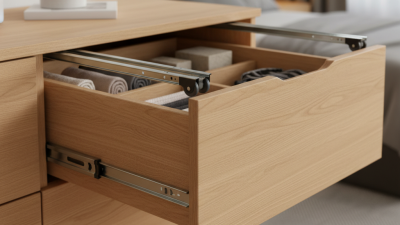
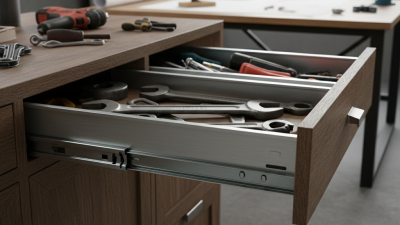
Telescopic guide rails support smooth movement in cabinets, industrial drawers, battery trays, medical carts, and machine enclosures. They allow components to extend fully while maintaining controlled alignment. In workshops, rails are often exposed to dust, vibration, moisture, or repeated impact. Small details matter. A rail that feels smooth during a showroom test may perform differently after thousands of cycles.

Purchasing should begin with load capacity, extension length, and installation space. Static load ratings are not enough. Buyers should check dynamic loads, uneven loading, and the position of the center of gravity. Stainless steel suits humid environments, while treated steel may offer better value in dry equipment rooms. Ball retention, locking functions, travel stops, and corrosion resistance also deserve close inspection. Measure twice. A few millimeters of error can create binding, noise, or premature wear.

Supplier reliability involves more than a low quotation. Request drawings, tolerance data, cycle-test results, and samples before approving a large order. Confirm whether the stated load applies to one rail or a pair. Ask how performance changes under side loading and temperature variation. In practical installation work, alignment is often underestimated. Even a strong rail can fail when mounting surfaces are twisted. I have found that simple field testing reveals problems that specifications sometimes hide, although test conditions should be recorded and repeated consistently. Availability of replacement parts and technical support may matter as much as the initial price.